
Google just dropped some seriously exciting news at its annual I/O conference. If you’ve been following the AI space, you already know things move fast. But this time, Google may have outdone itself.
Let’s break it all down in plain English.
What Exactly Happened at Google I/O?
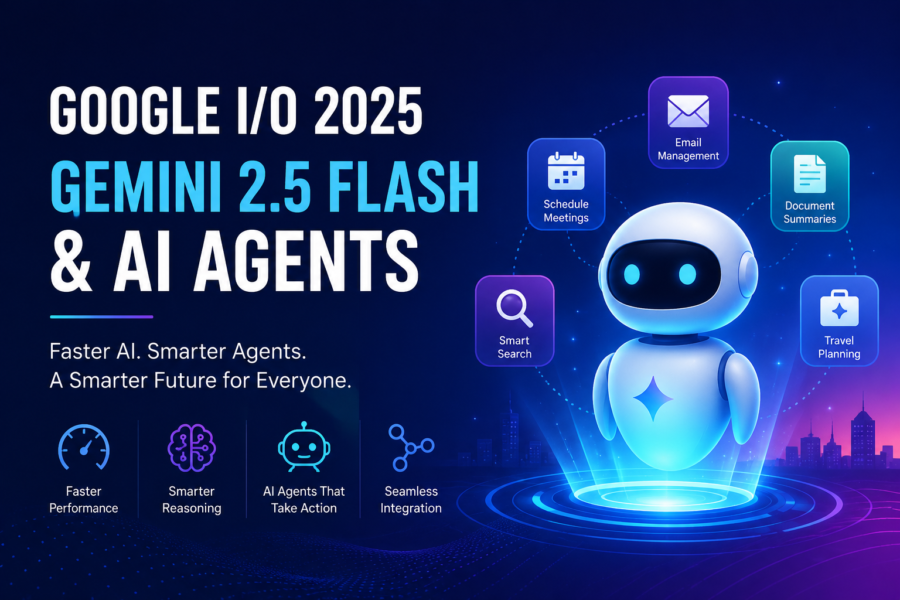
Google I/O is Google’s big yearly event where the tech giant shows off its latest innovations. Think of it like a tech Christmas morning. This year, the spotlight was firmly on Gemini 2.5 Flash and a new wave of AI agents that could change how we use technology every single day.
So, what’s the big deal? Let’s dig in.
Meet Gemini 2.5 Flash
First things first. What is Gemini 2.5 Flash?
In simple terms, it’s Google’s newest and fastest AI model. It’s designed to be quick, efficient, and smart without burning through massive computing resources. Think of it like a sports car that also gets great gas mileage. You get speed and efficiency in one package.
Here’s why that matters for everyday users:
- Faster responses when chatting with AI tools
- Smarter answers with better reasoning
- More affordable to run, meaning it could reach more people
- Better performance on complex tasks like coding and analysis
Google has been working hard to keep up with competitors like OpenAI and Anthropic. Gemini 2.5 Flash feels like a real statement that they mean business.
What Are AI Agents and Why Should You Care?
Okay, here’s where things get really interesting.
You’ve probably used AI to answer a question or write an email. But AI agents are a step beyond that. They don’t just respond to you. They actually take actions on your behalf.
Imagine telling an AI, “Book me a flight to Miami for next Friday and find a hotel near the beach.” Instead of just giving you a list of options, an AI agent would actually go ahead and handle the whole process. It searches, compares, and books, all while you focus on other things.
Google unveiled several new AI agents at I/O, designed to work across different tasks and platforms. These agents are being built directly into Google’s products, which means they could soon be helping you in Gmail, Google Docs, and even Google Search.
How Does This Change Things for Regular Users?
This is a fair question to ask. After all, new tech announcements can sometimes feel distant from real life.
But this one feels different. Here’s why.
For work: AI agents could handle repetitive tasks like scheduling, summarizing emails, or pulling data from spreadsheets. That means more time for the work that actually needs your brain.
For personal use: Imagine having a personal assistant that manages your calendar, finds deals online, or even helps plan your vacation, all automatically.
For developers: Google is also giving developers new tools to build their own AI-powered apps using the Gemini platform. This opens the door to all kinds of creative new software.
Google vs. The Competition
Let’s be honest. Google isn’t the only player in this game.
OpenAI has GPT-4o. Anthropic has Claude. Meta has Llama. The competition is fierce. But Google has one major advantage, its deep integration across products that billions of people already use every day.
Bringing Gemini 2.5 Flash and AI agents into tools like Search, Gmail, and Maps gives Google a serious edge. It’s not just about having a great AI model. It’s about putting that AI where people already live their digital lives.
What Comes Next?
Google has signaled that these updates are just the beginning. More features, more integrations, and more powerful AI tools are on the way throughout the rest of 2025.
The real question is, how quickly will these tools make their way into products you use every day? If Google’s track record holds, probably sooner than you think.
Final Thoughts
Google I/O 2025 made one thing very clear. The AI race is far from over. With Gemini 2.5 Flash and a new generation of AI agents, Google is pushing hard to lead the pack.
Stay tuned. Things are about to get very interesting.